Showing posts with label What is Hip?. Show all posts

Tuesday, April 11, 2006

What is hip? (part 6); or, Back to york.


John Boswell, no relation to the great biographer, is a New Agey pianist from LA who once wrote a musical with Tim Robbins (well Susan Sarandon has already made her appearance in this blog, so you knew he was coming), while they were at UCLA (sorry but you got well and truly chomped!). He also did an album, The Painter, which includes the track "Back to York."

I was fortunate enough in Spring 1985 to win a Rotary Foundation Post-Graduate fellowship which would allow me to spend the following year on a M.A. course on the English Romantics at the University of York. I traveled around Great Britain a lot doing a slide show on differences between the US and the UK and more specifically similarities betwen the South and Yorkshire. One jokey example: clearly the US was bigger, better, and more powerful because we had AAA while Brits are stuck with AA for roadside assistance. That's right we're 1 better—to the accompaniment of slides showing car windows with Aaa2_05.gif red, white, and blue Triple A and mainlogo.gif yellow and black Automobile Association stickers. I also had a lengthy excursus on Panama City Beach and especially the famous Goofy Golf. The fact that we want to play putt putt through the legs of a giant paper mache T Rex says a lot about America's kinder sensibilites not to mention our general lack of historical education.

I was very lucky to be hosted by the Rotary Club of York (the oldest in the area and one which often features the Archbishop as an ex officio member). Back then they met weekly in the famous Royal York
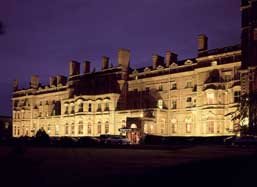
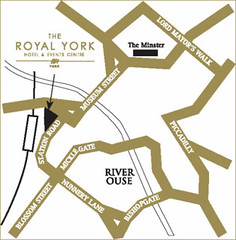
Royal York Hotel RYH location map

railway hotel and provided with a real opportunity to get an insider's view of many aspect of life in the North. I fondly remember a special tour around the eaves of York Minster as they were being repaired by a Rotarian's company, of course, after a major lightning strike (that's a rare opportunity to get that close to the genius of medieval engineering), stumbling through the waterlogged "ditches" that comprised parts of the Brönte Way walk only then to soar/well scramble up really onto the most glorious heaths you have ever seen. We started in Lancashire (probably at Wycoller and I should mention that many of the ewes had just calved) and ended in Yorkshire nearby the famous Haworth parsonage, all a bit of walking and fundraising. In fact the greetings and hospitality I met at every Rotary Club I visited were superb from Sheffield to Bradford to Harrogate to Wakefield and beyond. York, of course, was also an ideal situation for my own personal travel as it's not only a rare node for going east-west on the train service but also part of the East coast Intercity 125 service. A non-stop would get you to central London in under 2 hours! I often astounded my English undergrad friends when I told them I Had gone down to London for the day and was back. Morning train, quick early lunch a matinee show or shopping and then home. American and British senses of distance are quite different, probably due ot the relative sizes of our countries.

Yes, I learned a lot about Keats, Shelley et al. But I learned a whole lot more: how to shift with your left hand and drive on the "wrong" side of the road, what specific gravity is, what Peculier means when not referring to a religious division, how hard it is to come up with daily swim team workouts that don't rapidly become repetitive and boring, why Wensleydale with Bath Olivers is the snack of the gods, why Tetley's Bitter now Cask (the real ale not the tea) should have a foamy head and a soapy taste, how to properly cue an album for radio presentation at URY (memories from that experience here, how to hold original rare prints by the likes of Cruikshank and Gilray in your hands at the British Museum's prints and drawings department, how to format for and print A4 paper on an American laserjet set up for 8.5" x 11", why the Commonwealth games really are cool, why Timothy Taylor Landlord cask is one of the greatest pulls ever, why the cricket fans at Headingley piss of the London and especially MCC establishment, how to navigate central London's traffic grid (what was I thinking? 20 years on you could offer me a million pounds and I would refuse to drive inside the M 25!) et cetera, et cetera.

But this is an entry about some significant mentors not a glorious year abroad. I had three tutors on my course: Professor Tim Webb, Jack Donovan (like me an American), and Hugh Haughton (the then junior partner). I wish my memory were better but I've lost track of names from 20 years ago. I briefly visited York again in March 1987 and took this photo of my MA classmates who happened to still be in town for one reason or another.
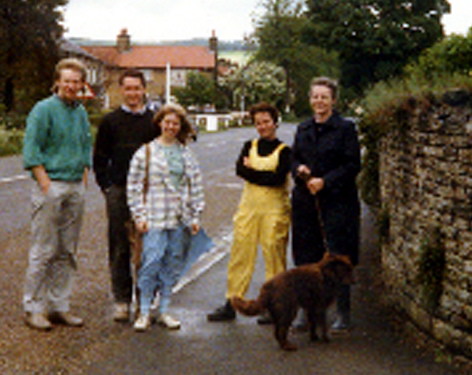
York MA Reunion March 1987


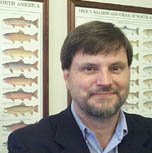
Tim Webb
Tim Webb was the senior fellow and leader of our merry band. He specialized in constructing devilish library problems usually involving an unexpected twist that required some kind of lateral thinking before one could begin to arrive at a proper answer, if one indeed existed. Thus the infamous Cervantes Shakespeare similar birthdates question.

Tim took an MA from Trinity College Dublin and D.Phil. from Oxford. His early academic work focused exclusively on Shelley with a sideturn into Romantic Hellenism. Before becoming a Professor at York in 1985 as I was arriving, he had also taught at Leeds and Michigan State. He moved with Professorship to Bristol in 1989 and spent the decade of the 90s as its Head. His further publications are too extensive to discuss here; let it suffice that the interested look here for further details.

The picture above captures something of the spirit of the Tim Webb I knew. The slightly (but only slightly) demonic glint in the eyes behind the doorknocker beard. He could crack the whip when it was needed; I remember an interesting office session after my first short paper offerings about standards. Let's just say it didn't happen again.

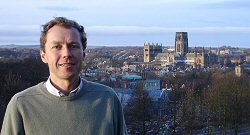
Jack Donovan
Like my position amongst the students on our course, Jack was the sole American Reader. He earned a BA from BU, an MA from KU, and a PhD from Birmingham. His early work on Samuel Butler's satiric masterpiece Hudibras came out as a series of articles in the 1970s. More recenty he has focussed on Shelley, serving as a contributing editor to Longman's edition of The Poems of Shelley and just now finishing up a Penguin Classics edition of Shelley's poetry and prose. Since I left York he appears to have gone part time and splits between the English Department and the now decade-old Centre for Eighteenth Century Studies.

Speaking of distances again. A funny thing: I once had a seminar paper due which was done but that I had forgotten to drop off. I called Jack at home from a phonebox outside my B&B on Skye and said I'd have it to him that afternoon; he was a bit shocked when I told him where I was. We still managed to tool around Ben Nevis and across the lunar landscape that is central Scotland before doing a late lunch in Auld Reekie and then jamming down the A-68 to the A1 at Darlington en route to Heslington.

I did my very best to draw up a list of common differences between English and American spelling to avoid "errour" in my M.A. thesis, but more than a few Americanisms slipped through I can assure you. Rumor has it (well Tim Webb told me when I visited in the Spring of 1987) that Jack had done the yeoman's chore of whiting out and correcting these items in the final copy. Thanks!

Hugh Haughton
Junior partner in our triumvir of teachers. Hugh took his BA from Cambridge and an MA from Oxford assuming a lectureship at York before completing a D.Phil. 20 years ago this became a running gag with the other course leaders as Hugh notoriously "missed" deadlines, including some long forgotten (at least by me) essay. But a cursory glance at his academic biography tells an utterly different story now. The advantages of a system which allows ideas time to percolate are manifest. He has become a recognized expert and well published in no less than 3 (count 'em) distinct fields! There's nonsense lit where he did a definitive edition of Lewis Carroll's two Alice novels as well as one of Kipling's Wee Willie Winkie plus he edited The Chatto Book of Nonsense Verse. In Romanticism, he edited the first major collection of essays on the newly canonical John Clare, a poet I was first introduced to by John Brewer in the spring of 1983. And then there's the Moderns be they poets or Irish writers of any ilk belying his roots in Cork. His major study of Derek Mahon is forthcoming.

Personally I was always fascinated by Hugh's interest in any scratchy old vinyl he could find, be it blues, jazz, or classical. We managed to talk jazz which was the area of those three I was most knowledgeable about then; I've done a lot of gruntwork on the blues since then, but that's another story. I first heard Enrico Caruso in the seminar, when he played us a bit of a recording of Beethoven's Fidelio, a truly memorable auditory experience. He was in attendance when I tried to enliven our seminar by casting my discussion of some rare lost ms in the terms of one of Dr. Watson's narratives of a case for Holmes, but was kind enough only to critique the one or two anachronisms, linguistically speaking.


YORK M.A. thesis
Looking back at my thesis on The Parlance of Peterloo: Common Themes in Discordant Reactions to the Manchester Massacre, I'm still surprised by how little major work has been done on this central event in the general revolutionary history of Enlightenment England. I guess people too easily take such a famous event for granted without fully understanding it. I know since writing my thesis there's been at least one major book and some significant coverage in Chandler's England in 1819 not to mention Jeremy Black's conterfactual revisonism of said event, but still . . . . I mean Melvyn Bragg didn't get around to the Manchester Massacre until late last year. I suspect if I did the thesis now it would have a much heavier theoretical component. What exactly did I mean by "verbal," "visual," and "iconography." Are there any complex reasons that conservatives and radicals alike used the same iconography to describe the events, merely changing to whom each symbol referred? Why was the primarily biblical imagery of the Pale Rider so apt here? Surely there are other icons of death available for deployment (unless of course it really was all about Wellington's troops and his supposed "whiteness")? If I had actually re-read the thing after 20 years, I suspect there'd be far more question to think about. I'd also be forced to deal more with all of Ronald Paulson's oeuvre. I can only imagine what directions John Barrell would have pushed me in had he been at York in 1985-6. Still I learned a lot, got to deal with my beloved, crabby conservative Scott "once more," and actually held some Cruikshanks and Gilrays in my gloveless mitts down Bloomsbury way.

Serious Coda and a Moment of Quiet Reflection

I recently learned that my dear Rotarian host, Dennis A. Nicholls, formerly of Strensall and Terry's and Rowntree Mackintosh, passed after 88 wonderful years. Here's a picture from the last time I saw him in the back beer garden of Heslington's Charles XII pub:
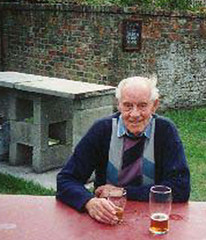
Nicholls

I am extremely sorry my condolences are so belated. But deeply heartfelt thoughts for Elizabeth, Penelope and Robert, and for all the grandchildren and the one great-grandson. I'll always remember Christmas day 1985 with the Queen, crackers, and the lot.

Official notice of his service of celebration can be found here.

His wonderful spirit continues to surround me at home, as I have framed many of his famous Christmas cards which were fronted by intricate pen and ink drawings of typical York scenes. Here's a few examples:
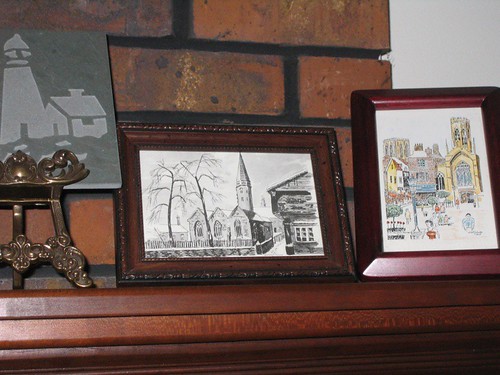
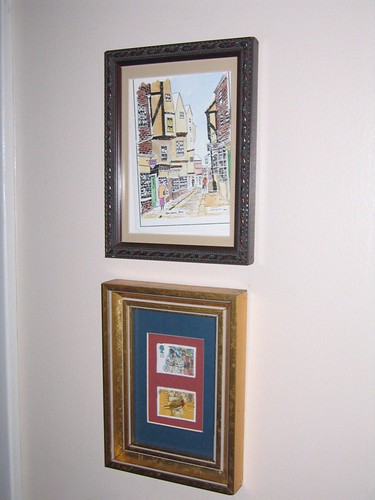
2Nicholls.jpg

Shambles.jpg

Ta.
Saturday, April 08, 2006

What is hip (part 5); Or, Pahk the cah in Havid Yahd.


I was graced not only with a great support staff at North House but also a series of non-residential "Professorial" mentors from my Freshman year forwards. I've already discussed John Brewer. Now you'll meet the late Herschel Baker, Wallace MacCaffrey, James Engell, and Margaret Corey, all of whom I had at least two courses with.


Herschel Clay Baker
As a wayward, sophomore-standing Biochemistry concentrator, I wanted to branch out my second semester of college and take a real literature class not involving mere composition. The choices came down to English 12B: Shakespeare (not at that time part of the CORE as Literature and Arts A-41) and English 131: Milton. The former was taught by the brilliant Marjorie Garber, although she was a bit too Freudian at that time for my tastes. O.K., O.K. so a sword is a phallus, we get it now please move on! Her large lectures were masterly combos of rhetorical display and serious erudition. The size of the lectures was really the only problem as they offered no respite from the also large intro science classes I was hoping to evade. English 131 on the other hand had maybe 30 students, mostly honors juniors and seniors and potentially one crazy first year sophomore-standing non-concentrator. Here's some of what what the 1981–82 Confi Guide had to say about Milton:
In a department which seems to specialize in offering vague, generalized outlines instead of real courses, English 131, "Milton," is truly an exception.
* * *
Herschel Baker's charismatic lectures crack open the often lofty and obscure material and reveal the true wealth of beauty and meaning in Milton's work.
* * *
By the time he gets around to the three biggies, Baker sometimes has to speed up his lectures to get through the material, and you get the impression he has more to say. But Baker, when hurrying through material, is still more informative than most professors taking their time.
* * *
Most of the students who take English 131 are English concentrators, but since Baker does not assume any foreknowledge of the material, the course is open to anyone who is willing to put in a decent amount of work and doesn't want to deal with the usual survey-course pitfalls.
Sold!

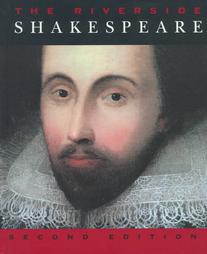
Herschel Clay Baker was a Dallas native who attended hometown SMU before coming to Harvard to study with Douglas Bush and earning a PhD in 1939. After being made a junior faculty member, he returned to teach at SMU until he was called home by Mother Harvard, where he spent the rest of his long and productive academic life. Starting with early work on John Philip Kemble, Herschel would come to focus primarily on Renaissance historigraphy and humanism. He co-authored a two volume anthology of renaissance poetry and prose with Hyder Rollins which though out-of-print for a while in the 1980s has never really been bettered. There are the two famous short books (really reprinted lectures): The Wars of Truth and The Race of Time, the latter being the famous Alexander Lectures at the University of Toronto. For my generation of students, however, Baker will always be best known as the helpful guide through the morass of Shakesperare's History Plays via his insightful Riverside Shakespeare introductions, though our book (the first edition not pictured above) had the much cooler looking brown cover with yellow and gold scrawls. Herschel Baker became Chairman of the English Department in 1952. Later he would be named the Fancis Lee Higginson Professor of English Literature.

A dapper dresser in old fashioned 3 piece suits with an ever present homburg and the classic 1950s green Harvard book bag slung over one shoulder, Baker made almost a matched pair with that other great old professor, William Alfred. In fact both were in their ways institutions at Harvard but still outsiders: Baker for his courtly, serpentine Texas-inflected cadences sometimes ridiculed by certain junior Yankee Americanists hailing from the Westchester 'burbs (Herschel would have shrugged and thought, "What can you do? He's from New York, that's just how they are") and Alfred for his working class, Roman-Catholic Brooklyn Irish-American roots (famous prize-winning, Faye Dunaway career-breaking play notwithstanding).

Among his other "quirks" were the pipe-smoke-filled, cramped Widener Stacks office in which he held court, preferring that to office hours elsewhere. And, of course, pre-computer, he proved to be no mean typist. A skill-lessness with which I can sympathize but which word processing programs have made moot. Many an interesting note appeared on quarter-sized departmental stationery replete with xs and other crossings out and that inimitably tiny chicken scratch penmanship. Then there was his binder notebook for Milton, which he would open with a flourish at the beginning of class and close equally dramatically at its end. Every time he opened that thing, yellowed bits of dust or perhaps it was just mouldering paper that was chemically dissolving mushroom-clouded into the air. Jokes about a dry-as-dust and dessicated academic were completely plausible until Baker began to lecture in those honeyed Ciceronian periods. I always felt that if in my formal academic prose I could mimic his speaking voice I would have something.

English 131 in the spring of 1982 was the last major lecture class Herschel Baker gave. The class presented him a commemorative plaque engraved with some appropriate lines from Paradise Lost:
Geatly instructed I shall hence depart,
Greatly in peace of thought, and have my fill
Of knowledge, what this vessel can contain;
Beyond which was my folly to aspire. (XII, 557-560)

I hit the Daily Double by also taking the last class Herschel ever lead, English 192C: The Renaissance in England, a small seminar in which I wrote about authorial duplicity in the Preface to Robert Burton's Anatomy of Melancholy, all the while reinventing Stanley Fish's Self-Consuming Artifacts without realizing it. Or perhaps it was just a re-fashioning! Ironically Herschel lived in Wellesley next door to my father's Harvard mentor, Konrad Bloch, under whom he did a Biochem post-doc from 1960–62.

James Engell
Jim is a humanist of the old school who might be troubled by some of my wilder predilections for things Continental, but he is also a soul deep thinker about the great truths and values of the Humanities and has been a staunch warrior in the battle against rampant scientism and corporatization on campuses across the US.

A 1973 magna cum laude graduate of the college, Jim recieved his PhD in English in 1978 becoming arguably W. Jackson Bate's last great protege, a fact about which I once twitted him, a riposte he took with good graces in the spirit it was offered nevertheless offering at least as good if not better than he was given. More on this later.

I took three classes with Jim—one each my sophomore, junior, and senior years: English 145: Major Satiric Poets, English 190: Major Critical Approaches, and English 256C: Coleridge (co-taught by the aforementioned Jack Bate and featuring a smorgasbord of future academic all-stars like NYU's Cyrus R.K. Patell and my fetching red-headed classmate Anne Margaret Daniel).

One exciting assignment in Satire involved devising our own original satiric verses. Entering the spirit of the thing, I took the greatest academic risk I had ever taken by imitating not only a specific verse type but also the notions of its content. My choice was Pope's "Epilogue to the Satires: Dialogue I" in which a "friend" threatens to call treason on Pope's own writing; in my case I critiqued the very issuer of our assignment, Prof. James Engell. At semester's end, Jim produced a little pamphlet, Satires by Divers Hands. I was amused to find that my effort had drawn its own imitative response:

Epilogues to a Satire
Li. A bright young Angel, he would labor on,
Romantics to Enlightenment upon.
At Harvard College, he would seize the bait,
as Ph.D. could not for tenure wait,
Half-score and sev'ral months was all it took,
Now full, our Angel, in the Tower dwell'd,*
and plann'd, and dread ten-headed monster quell'd.
In class a brilliant star, au naturel,
Precocious and loquacious, he held spell:
Oft' would he quote, and oft'er still ask them,
From whom such memorable words did stem,
Be they allusion or strict paraphrase,
when said and done, he would his eyebrows raise,
and puzzl'd look when nothing echo'd praise.
Next would he have his pupiuls imitate,
'til unrhym'd words against the conscience grate.
A-
Fr. Stop: You threaten danger, take respite,
Before Professor's pen your grade will slight.

* The metaphorical tower here in reality was the top floor garrett office of Engell in Warren House, then home to departmental and senior faculty offices. Junior faculty were even further afield out Kirkland Street just beyond and across from William James Hall. I won't speculate on why his senior colleagues placed him there.

***

Fr. I think this treach'rous stuff, it treads the line;
A mutineer, like cats, takes life by nine,
So Strike him down with cat-o'-nine tails' blow
And flog in sense, if sense you can't bestow!

Prof. But there's a certain something, j'ne sais quoi,
that makes me hesitate t'enforce the law
(the harsh sea law which DANA helped reform,
A gentle man who braved the harshest storm),
A certain wit, an understanding part--
And damn 'me, 'sides it catches Pope's own art.
Angelum amo, sed veritas amo magis.*

Fr. Watch out; he'll turn philosopher and plan
Next year to write a new Essay on Man.

* The gentle reader will forgive the bad metrical variation on "Amicus Plato, sed magis amica veritas" (I'm a friend to Plato but a greater friend to truth.) The editors have discovered a variation of this:
What lashes the due? twenty-less a score,
For angels I love, but truth I love more.


Whew! Bullett dodged, but then you'd expect someone teaching a course on satire to have a sense of humor, no? But then you haven't read Howard Weinbrot's Alexander Pope and the Traditions of Formal Verse Satire have you. Kind of puts me in mind of the Buzzcock's debut single from the Spiral Scratch EP.

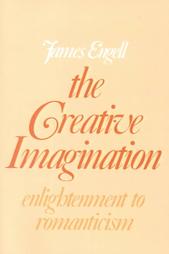
I did well in that class. Stopping by the next fall to pick up my marked up final exam blue books, Jim floored me by asking to become a research assistant. I did and spent the rest of the year scurrying around Widener and into the dungeon that was the theatrical holdings in Pusey picking up quotes, references, etc. which were deployed, I believe, partially in Johnson and His Age (as pictured above) and moreso in Forming the Critical Mind: Dryden to Coleridge.

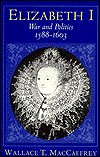
Wallace T. MacCaffrey
Wally MacCaffrey is one of the great Early Modern British historians of the twentieth century: tripartite chronicler of Elizabeth, surveyor of Exeter, beloved husband of Isabel Gamble (herself no mean slouch as a literary critic) and with whom he had the rare privilege of being a husband and wife Departmental Chair team, deliverer of impossibly smooth lectures without aid of notes, and most importantly patron of the turnip and its historical significance.

MacCaffrey graduated from Reed College in 1942 and took his PhD from Harvard in 1950. He taught at UCLA and Haverford before returning to Harvard's History Department in 1968, which he also chaired for a little over a decade. According to the notes for the 2003 American Historical Association's "Awards for Scholarly Distinction"
His first book, Exeter, 1540–1640: The Growth of an English Country Town (Harvard Univ. Press, 1958), set the agenda for subsequent work in early modern English urban history and remains a model for all similar studies.
Just as impressive was his early article on "Place and Patronage in Tudor England" in S.T. Bindoff's J. E. Neale festschrift, Elizabethan government and society (Athlone, 1961), remaining half a decade later the definitive statement on its topic. And I haven't even broached the triumvirate of tomes on Elizabeth starting with Princeton University Press' The shaping of the Elizabethan regime (1968):
an original and successful study of the first decade of Elizabeth's reign, which put foreign policy into its proper context as one aspect of the many-sided problem of government not to be separated from the other potential hazards facing the fledgling regime.

MacCaffrey has been a prolific contributor of "lives" to the DNB. Upon retiring in 1990, he moved to the original Cambridge and was affiliated with Trinity Hall and as a fellow of the Royal Historical Society.

I took the Tudor Stuart sequence from Wally consisting of English 1400A: Early Modern Britain I, 1450–1600 and English 1400B: Early Modern Britain II, 1600–1714. We turn to the Confi Guide one last time in this blog:
Three times a week Wallace MacCaffrey mounts the podium of Harvard Hall 104 and delivers a flawless, noteless lecture. Mostly he talks about the political history of England during the post-medieval period. But his occasional digressions into the sex-lives and personalities of some of the bawdier monarchs—always discreetly phrased—are well worth the journey through the murky depths of England's agricultural and constitutional history.
* * *
In either semester, or over the whole year, MacCaffrey is attuned to his students' every move. Take this man to the faculty dinner. He'll entertain you with stories of his trips to England, and he'll even remember your name.
Heavy duty reading list with a lengthy research paper and no sections, but what memories.

Like a gangly MacCaffrey late to class accidentally sprawling a huge roll out map across the Widener steps. And speaking of Widener, what about the top floor kingdom that was his official study. I mean the central island in that place must have been fifteen feet long and the views across Mass Avenue towards the Charles (at least on one of those rare Cambridge sunny days). I was privileged to nominate Wally for a debut teaching award administered by Undergraduates in spring 1984 and proud to be chosen from among his nominators to present a short speech of which this entry is a much extended and much revised version when he so deservedly won.


Margaret Corey
When we get to the first woman on this list, it's no surprise she's not a tenured faculty member, but rather a graduate student lecturer, such is the duality of the modern Ivy League academic thing to mimic Patterson Hood's prophetic phrase, especially in the Humanities where women are disproportionately underrepresented at the highest levels of the field, especially with relationship to their numbers at the lowest levels (i.e. as undergraduate concentrators or "majors" in the "real" world beyond Cambridge 02138). Margaret Corey once saw some pictures of Westwood and decided to leave her beloved Queens, New York City following Horace Greeley's advice, well except the bit about "young man." She earned an A.B. in English with highest honors from UCLA where her mentor was Dick Lanham and then headed back east for graduate work at Harvard. Eventually she would complete a dissertation under the direction of Jim Engell about Abraham Cowley, Royalist poet-playwright. However, she left academia to pursue work in the financial services industry.

My two courses with Margaret were year-long junior and senior tutorials in History and Literature of greatly variant natures. I used junior tutorials to read widely across fields, but also specifically to fill in gaps from my coursework, like Victorian Poetry. How many American undegrads can say they have read Browning's The Ring and The Book in its entirety? As always Margaret had this giant slab of butcher block white paper on her barren desk and by each two hour session's end would have drawn complex Mandelbrotian fractal displays of intersecting balloons, underlined names, themes with question marks by them, and the like. I only regret that I never asked to keep just one such sheet as a memento. But it taught me a great deal about brainstorming and lateral thinking (something I've always been pretty good at). What has Always been my real weakness is old fashioned systematic thinking. Two years of Corey boot camp helped me begin to resolve this issue, though I struggle with it to this day. strangely enough, I decided to write my thesis about the historical novels of Scot (specifically those about real and imagined Jacobite uprisings) with a venture into his historiography on Napoleon and revolutions, seemingly a perfect topic to meld history and literature together. Whatever the thesis' shortcomings it did possess a clever Watt-inspired title: "The Novel Uprising: Sir Walter Scott and Revolution." Well, I took my first class featuring novels spring semester senior year. So here I go again, planning on writing my senior thesis on a genre I had yet to study seriously in college let alone learn how to write about. Salvaging a magna plus out of that opening prospectus is a feat for which Margaret owes a great deal of thanks.

In future I'll try to keep these entries shorter, but Harvard played a really significant role in my future life even if was but a short four year stint.

Monday, April 03, 2006

What is hip (part 4); or, North toward home.


In order to have any hope of ever finishing this series of portraits of significant mentors (mostly but not exclusively intellectual) in my life, I'm going to do some joint entries of folks who I dealt with at concurrent time periods. These by necessity somewhat shorter biopics should not be taken as any relative decision about the various merits of said mentors, but rather as me bowing to the realities of job searching, writing, homeowning and the concomitant lawn maintaining in a MS spring/summer vis-à-vis my blogging activities. I want to thank the late Willie Morris for the loan of my subtitle. I had the privilege to drink some bourbon with him once at a party at the MUW presidential mansion [Thanks for the invite, Ann!]. We retired to the library and gabbed about Southern Football in the 1970s and the greatness of Herschel Walker while he was at UGA, all after he had signed my long-cherished first edition of The Courting of Marcus Dupree. But once again it's North Toward Home. Whatever would I have done had I lived in Pforzheimer House as NoHo is now known.

For 3 of my 4 years at Harvard, I lived at the Radcliffe Quadrangle as a Quadling in North House, where I met an incomparable series of house tutors and staff. I'm going to talk about only 5 of them (that's including 2 couples as a single unit) in some detail: Jan and Liz Ziolkowski, Stephen Mitchell, Neal Johnson, John and Rosalee DiUlio, and Colin Bain. Then I'll briefly remember the rest of a great group of folks that made North House truly a home.

Neal Johnson
Neal Johnson was from the west; he transferred into Harvard College from Portland's Lewis & Clark and graduated with a AB in Government magna cum laude in 1980. In 1982-3, when I matriculated up from the yard, he was 2L and lived across the hall in Moors 402. As I had long professed an interest in THE LAW, at least since seeing Inherit The Wind, I was excited to have such close access to the pre-Law tutor. I soon found Neal was just an interesting cat with his dual passions for obscure Sarah Vaughan on vinyl and a hidden desire to be an Ant person. As the year progressed we became devotees of this newish late night ABC news show with Ted Koppel, because there was a prison takeover/riot in the news in 1982-3 with interesting links to Attica. Neal was a fount of good advice and fellowship.

Inevitably, I moved out of Moors as a junior. Neal graduated with his JD that year. I saw him a few times and stayed with him once on the Upper East Side, There was a memorably bad show by Astrud Gilberto in full-on sex kitten mode complete with ears and a tiger tale at S.O.B.'s. Eventually, he took a Corporate Law job in Riyadh and in essence vanished from the face of the earth

Jan and Liz Ziolkowski
Jan and Liz Ziolkowski met as undergrads at Princeton. Jan graduated in 1977 with a degree in Medieval studies. He won a prestigious Marshall Scholarship and earned a PhD in Medieval Latin from that other Cambridge. Liz earned her degree in Chemistry a year later and then joined Jan abroad. I was always amused by their story about seeing Animal House in England and being the only people to laugh during the screening. 2 countries divided by an ocean, a common language, and a bit more I guess. Jan spent one post-graduate year at the American Academy in Rome before arriving at Harvard in 1981, where he has been employed ever since (one of those rare professors who rose through the ranks and achieved tenure and full status without having to go away for a period). They were joined in their duties as head Tutors for Moors hall by the adorable Saskia and her younger sister Ada. I really don't want to think about how grown up they are now! But rumor has it Saskia is in grad school in Italian at Columbia! and Ada is an administrative assistant at a major MIT lab . . .

Jan's most famous course at Harvard was probably his Core offering, Literature and Arts A-31: Beast Literature, once famously the target of William C. Bennet's monomaniacal egotistical wrath in a NY Times op-piece entitled "Aristotle, Tolstoy, Donald Duck, Beast Literature". Hey moral arbiter, try getting a handle on your gambling addiction first, why don't you. Predictably instead, I took Comp Lit 211: The Medieval Lyric, a course primarily for Graduates. We read across the globe including into the Moorish tundra for some Arabic fare, through the Bible in search of Mary and love, and all around France with the troubadours and trouvères in both langue d'oc and langue d'oïl. I ended up writing a paper that looked toward a useful structural definition of medieval satire. Someday I might actually do something with a revised edition of that paper as its still pretty virgin territory according to a 2005 MLA Bibliography scan. I learned a lot from Jan: what it meant to be a true scholar and how far I was from it at the time and still am. I also learned what it meant to love scholarship for its own sake. Plus I learned the necessity of casting the widest possible net to truly understand a subject, thus, par example, our foray into Arabic literature. First know everything, then and only then start composing!

Stephen Mitchell
Stephen Mitchell was reared in the Northern California shadow of Mt. Shasta. He is a not-so-Dirty Golden Bear (a little inside axe humor there) with degrees in Anthropology and Scandinavian. He took his PhD in Scandinavian at the University of Minnesota. Like Jan he has spent his entire academic career at Harvard from assistant to tenured full professor; quite a double feat for former NoHo tutors I'd say! At Harvard, he replaced Ted Andersson who had fled west and whom I would meet during graduate school. A true medievalist, Stephen showed his disdain for SCA or as he dubbed them "the people who wear parts of old refirgerators and hit each other with sticks on the Quad." Stephen also had a penchant for classic late 60s and early 70s rock and folk, especially Van Morrison, as well as a vast knowledge of Persian rugs.

Stephen was one of the rare people from whom I took more than one class; rarer still because neither class fuflfilled concentration requirements. As a junior I took Scandinavian 150: Old Norse Literature and Society. To this day, I try to re-read one of the sagas every year, even if I think Byock's feudeme was so much piffle ripping off Michel Foucault's épistémés. I always liked the story about the old Icelandic woman who kept track of the years by re-reading Njal's Saga annually. One of the intellectual highlights of my Harvard career was the North House seminar: Ibsen and Strindberg. No gut here; we read several plays a week and had at a minimum a six page paper due every week for the entire semester. When faced with that kind of challenge, one learns how to focus, and by virtue of sheer repetition one surely must become a better academic stylist.

I will also always remember Stephen's kindness and humanity; like the time he lectured a dining room table about why practical jokes were no joke at all (please I don't mean to make him sound a prig; just someone setting a bunch of undergrads in an überarch phase straight). He eventually left NoHo to become a long-time Master of Eliot House. Visiting Noho in June 1986 for a friend's graduation (Tom Mueller) and two others' wedding (Terry Martin and Sally Murschall), I ran into Stephen who said he and Jan wondered why I hadn't asked them to write grad school recc letters. I mumbled something about wanting to focus on letters from people in my field (English History and Literature). Truth be told I had made a tactical error in picking my letter writers as well as in restricting their number, and by the time I realized it I was busy working on an MA overseas in the UK. I did get accepted to Stanford, so it turned out o.k. Think of this as a partial apologia for the folly of youth.

John and Rosalee DiIulio
My junior and senior years I lived in Comstock Hall whose head tutors were John and Rosalee. They both hailed from Philly and were UPenn Quakers. John was a protege of Professor James Q. Wilson and has gone onto a distinguished if occasionally controversial career in academics (Body Count and the Superpredator) and government (Faith-Based Initiatives). At least he had the good sense eventually to tell Shrub to take a hike. Despite our different political leanings, I always felt John believed in the truth of his ideals and pursued his goals out of this fervor and not out of the usual desire simply to achieve power or riches. John and Rosalee's inner city immigrant past also served as a good example about difference for what was a shockingly white upper middle class (AT LEAST) student population at supposedly diverse Harvard (note I count myself in this group). If the pictures above, however self-selected, aren't a clue to this reality, then I've got some "beachfront" property for you in Southern Lousiana going real cheap just in time for the balmy summer climes.

AT NoHo, John added greatly to the intellectual environment by founding the DeTocqueville society which read the GREAT BOOK and had monthly discussions in John and Rosalee's Comstock digs. Most attendees were admittedly just Gov jocks sucking up for grades and/or notice, but still the discussions were broad-ranging and fascinating. They also served a killer double bill of homemade pizza and carrot cake.

Colin Bain
A native Scot, Colin matriculated at Stirling University and Cambridge University earning a B.A. (Hons) from Corpus Christi in 1983, before entering the PhD program in PChem at Harvard and working under Prof. George Whitesides. What I learned from Colin might seem trivial, but it has given me an adult life full of pleasure, for he a lead a legendary seminar and tasting on the fruit of his native land, single malt whiskey, at which I first tasted the legendary 18 year old Maccallan, alas now priced beyond my regular means, and fell in love with Laphraoig's Islay "peat monster that takes no prisoners". Anybody who first properly introduces you to one of life's great pleasures merits mention in just such an article as I'm composing here. Copying being the sincerest form of flattery some six years later I lead an extremely similar malt tasting at the Butteryin my role as Head GRA for Rains Houses.

Colin's post-Harvard meteoric academic career is outlined here


Quick Refrain
Hana and Woody Hastings
Bio-luminescent legendary House co-Masters, who allowed me once to dine with an Atlantic City-era Susan Sarandon! Woody was the visionary creator of the Hastings Doctrine that "Any student in North House ought to be able to get from any place in the House to any other place in the House in his PJs - or less." The hastings through the best, wettest Master's Happy Hours in town; that's why the House Council bought them the wood embossed deluxe kegerator.

Sharon Morrow
The home state heart of the house

Peter x(?)
Security Man and cartoonist extraordinaire

Don and Bonnie Walls
Doyens of Wolbach and a godsend re: printing senior theses

Kristine Forsgard
Who would come to be Stephen Mitchell's other half

Frank Mormando
No you really don't bake cookies with baking soda (strange as that might seem), but you're almost Italian and almost a Jesuit so it's o.k. You see you need an acid to release the bicarbonate or you're left with a bitter or soapy taste, plus baking soda has a tendendency to produce unleavened (read FLAT) endproducts. Simple solution: substitue Baking powder for soda above. Results: excellent!

Kurt Campbell
once a mustcahioed brash ex-ballplayer; now a regular talking head on the NewsHour

Marcus Wood
Dropped the art or put it aside for an outstanding career in American Studies. Also lost his hair or chose the Yul Byrnner King and I look. I can't believe I missed this venture less than 100 miles from where I live; c'est la vie. An Oxford First whose Hilles conversations/SHARINGS I cherish to this day (20 years later), even though he continually showed me up for depth of reading! I have never been so intimidated by an intellect in my life except for any meeting with Jan Ziolkowski!, and Wood was a sweetheart to boot!

It was only a little more than 20 years ago today when I penned the following words about North House:

Three-and-a-Half Years in Cambridge
…. After Spring Break, somewhat resigned and tolerant students shuffle up Garden Street to the Quad to discover their House. Thus begins a pleasurable walk from the Square. The sights and sounds of a city park, a police station with automatic garage doors that only seem to be open when one is walking by, and a TM temple will come to be common markers of their daily experience.

The separation which others lament, they will soon admire. The distance provides them with a haven from everyday students' lives—academic, social, and otherwise.…

* * *

Spring rolls around. By junior year, these students realize that on a clear day when dingy Cambridge gray has led to Yale, the Quad is the prettiest piece of grass east of Lexington. By Eliot a dog frolics, and up towards the steps of Moors frisbees, balls, and bodies compete to fill the air. At the same time they welcome a new set of initiates to the surprises of North House.……

Summer gone, new seniors trundle stereos, rugs, and books up from the basement one last time.…

* * *

…. To jostle the memories, they lie on the Quad one last time. Wandering through the breezeway, memories of the intricate ice designs, which enlivened winter, surface. A final elevator ride. Perhaps a word to Sharon and Lisa if they're in. Then a walk to the Square, past the Capital of the Age of Enlightenment, the police station, and the Common—their signposts of experience.

Tomorrow or the next day we head south to the Yard and "professorial" mentors who used to hang out in Widener Faculty Offices, upstairs in Warren House, and in the Union annex, now part of the Barker Center.

Sunday, February 20, 2005

What is hip (part 3); or, long distance runaround

I was once a pretty good long distance swimmer: I completed a swim-a-thon (5000 meters) in under an hour at age 14, that's something like a continuous 1:10 pace per hundred for 50 hundreds (4 laps in this particular pool). I don't naturally come by a lot of athletic talent, so I had to work pretty hard to accomplish such achievements as age group bronze medals at Florida Junior Olympics, AAAA time standards in most events at 13-14, and "most famously" a 4th place at Junior Olympics the second time I ever swam the 500 free in competition as a 12 year old (more on this later). My success until I entered high school in 1978 was due to two coaches at the Tallahassee Swim Team (TST) which later became the Area Tallahasse Aquatic Club (ATAC) in 1979: Gerry Norris and Terry Maul.


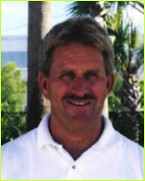
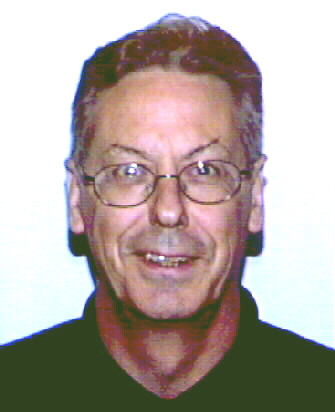
Terry Maul ca. 2005


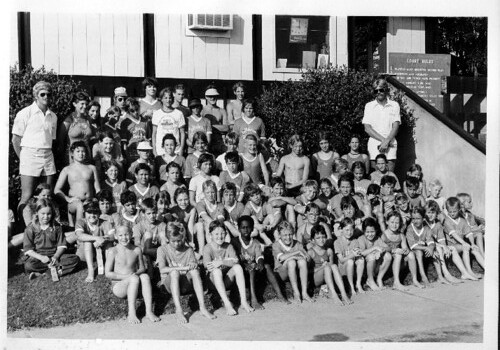
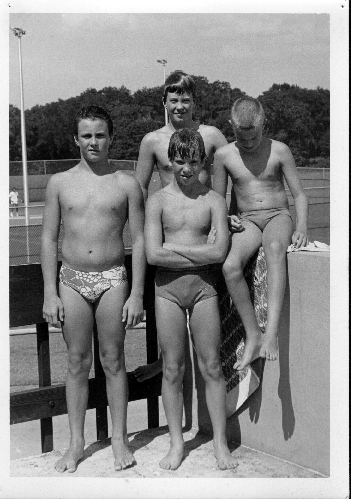
The mighty TST at '76 Killearn Invitational (which we won going away).
Terry's on the left; Gerry on the right; I'm in between wearing visor in first seated row.


Gerry graduated from FSU in 1974 and, even as an undergrad, was a part-time coach at TST, where I started swimming at Wade Wehunt Pool at Myers Park during the summer of 1971. Note: this pool was fed by a natural aquifer, so it had crystal clear but ice cold water. He served as coach and director of TST and ATAC for another decade before becoming an administrator with the Tallahassee Parks and Recreation Department under Randy Trousdell on a team which in that time has builta nationally recognized program. Gerry always made practice fun. Under his tutelage, I mastered the basics of all four strokes and became a more than competent age group swimmer.

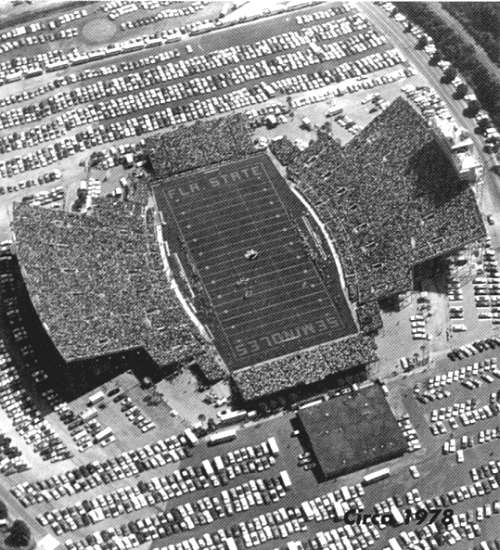
In 1975, Terry Maul became the Head Coach of the FSU Women's Swim Team and the TST swim program as well. This is the moment when I really became a serious yearround age group swimmer going to practice before school, lifting weights at FSU atheletics stadium complex, cross training with things like elastic cords and the infamous sideways skateboard pull up the underneath stadium ramps at Doak Campbell, practicing again after school, and swimming outside in inclement weather. One morning it was actually snowing while we swam outdoors (in a heated pool of course). It was cold enough your hair froze on the way to the locker room and ice formed in your flippers between uses. Technically the most important thing he ever taught me with respect to distance swimming was alternate breathing (that is switching sides) which smoothed out a tendency I had only to breathe to the right and thus veer that direction slightly. I also perfected my buttefly stroke under his tutelage setting up what would become my best events (distance free, 200 fly and 400 IM). In previous incaranations I had been first a very good breaststroker and then a quality backstroker (I swam that stroke leadoff on our 11-12 medley relay about which more post haste). Truth be told I was always a bit of an all rounder. My two bronze medals at the state level actually came in the 200 yard breaststroke.

In 1976, our 11-12 200 yard medley relay bested a state record at the Killearn Invitational. The time couldn't be double checked so we didn't "set" the record, and honestly Killearn's pool was notoriously fast and in all likelihood slightly shorter than an actual 25 yards. Most impressively perhaps, we lapped every other team in the pool beating the second place team by 55 yards in a 200 yard race!


That's me in the back. Steve Kupiszewski (standing in front of me) went to Arizona State University on a swimming scholarship after being high point scorer and Florida Swimmer of the Year at the 1981 High School Championships. He's now a night court judge in the Phoenix area, where he presided over Glen Campbell's DUI booking a few years back! I don't really know what happened to Greg or Kyle (to my right and left respectively).

Later that summer we had one last go round against national caliber competition at the Cincinnati Marlin's Invitational, still the farthest distance I ever travelled to an age group meet; we did not embarass ourselves in the at-that-time relatively unfamiliar long course (50 meter Olympic size pool) format, finishing 5th in our first ever national competition. Most exciting, local product Jim Montgomery became the first man to break the 50 second barrier in winning the 100 meter freestyle Gold Medal at the Montreal Olympics, which we watched on a big screen as the meet was briefly interrupted. It should be noted the world's best sprinter South African Jonty Skinner was not allowed to swim at these Olympics lest the majority of African nations had boycotted over the RSA's apartheid practices. A movement which led to the 1980 and 1984 political boycotts by the US and the Soviet bloc respectively. Skinner got his revenge crushing the record and Montgomery in Philadelphia later that summer at the U S Outdoor Nationals. Now he's a naturalized citizen and works for USA Swimming. Thanks to Rick Demont's tutelage at the University of Arizona South African swimming set a new high point winning the 400 meter freestyle relay at the Athens Olympics.

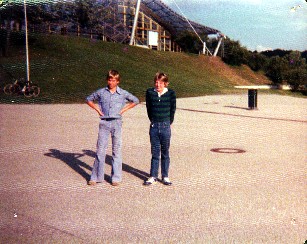
Still later that summer I came into my own as a swimmer at the Florida Junior Olympis in Bartow, FL. Several months before the AAU had decided to experiment with allowing 11 and 12 year olds to compete in a distance event, the 500 yard freestyle. I swam my first 500 at the Sattelite Beach Invitational and followed coach's orders by negative splitting a 5:50 pace, feeling I could have gone much faster. At Jr. Olympics, I decided on my own to go for it, all the while alternate breathing. I dropped over 30 seconds from my time finishing in 5:12.12 and "might" have won a medal had it not been for a miscue by my assigned lap card person. More importantly, the icy cool facade of Coach Maul split, as mutliple witnesses attest he was seen jumping up and down and yelling for me to "get it into gear" and "swim faster"! I went on to have a decent swimming career despite my short height, non-swimmer's build, and general lack of athletic talent. I did win two bronze medals at the state level, walked onto a Division 1 Top 10 team at Harvard where I earned a letter and joined the Varsity Club. But the summer of 1976 was arguably my best as a swimmer. In 1977, I lived in Freiburg-im-Briesgau, West Germany and swam throughout Germany while my father held a prestigious Alexander von Humboldt fellowship. I was visited by my friend and fellow relay member Steve K. We played at being Mark Spitz in Munich at the Olympic Park. I was also visited by my 8th grade algebra teacher, Mr. Davis, who had taught me some rudimentary German. He will be a future featue of this column. I last ran into Coach Maul outside Mexico City in December 1981, where the Harvard Men's Team and FSU Women's Team trained with and competed against the Mexican Olympic Squad. I've seen Gerry numerous times over the years in my hometown of Tallahassee, Fl. I haven't swum competitively since April 1982.

I won't conclude with a bunch of uninteresting clichés and platitudes about the value of sport. I will simply say that swimming got me in shape and convinced me that I could succeed at athletics. I learned a lot about discipline, hard work, and stick-to-it-tiveness from Coaches Norris and Maul. Finally the endless lap swimming allowed me to do some of my best thinking with respect to essay writing. In grad school I replaced swimming with long jogs in the Stanford Foothills, during which I puzzled out intractable textual problems in Shakespeare plays. For all that, thanks Terry and Gerry!

Wednesday, February 09, 2005

What is hip? (part 2)

GE&MsWest

1969-70 sure seems like it was "a long, long time ago in a galaxy far, far away." It would also prove to be my most adventurous year to date. My father had his first sabbatical as Biochemistry professor at FSU and would work with an eventual Nobellist in Sweden, Bengt Samuelsson. We joined an FSU group on Alitalia out of JFK, my first trip to the Big Apple, and a thrill to be in that famous TWA terminal 7,

F00007.JPG.jpg

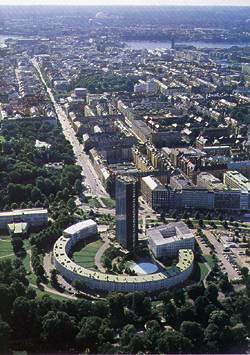
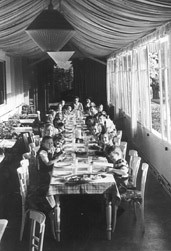
and flew into Pisa. FSU had a study abroad program in Florence. We slowly made our way north across Europe, stopping in Wolfsburg to pick up a 1970 baby blue VW squareback. Finally we arrived in Stockholm, Sweden and the Wenner-Gren Center, a mini scientific United Nations, where we had a three room apartment; here I am on the back patio modelling some German lederhosen. Meanwhile back in Tallahassee, FL school busing started and my neighborhood (white and full of liberal professors was paired with an all black school that was far closer to another white neighborhood, but one full of conservative, working class types (hmm . . . ). Furthermore, they also built a new "white school" Astoria Park, which opened in 1969, across Tharpe Street from San Luis Ridge. I attended first grade at the Stockholm International School, then known as the Anglo-American school after its primary clientele, at Johannesgatan 18, which had been a school since the late 19th century. Over the side entrance was a stone inscription, "Brummerska Skolan grundad 1882." I really enjoyed reading and writing in my diary there. The only bad day was when our teacher, Miss Spillett from Dover, taught the class to sing "Georgy Porgy," really not what a five year old needs to hear from his classmates! The British are a bit different. We had a fantastic, formal sit-down lunch every day. Annually on December 13th, the school had a special Lucia celebration; it was a highlight of my four months there.

I also loved tramping around the cobblestone streets of Gamla Stan, seeing Joan Baez sing "Blowing in the Wind" at Tivoli, visiting Skansen, and viewing the recently salvaged Vasa at the original temporary Vasavarvet.


When I returned home to the States, I got ready for my first day of US 1st grade at John G. Riley Elementary. I walked from 1301 Parga Street down the hill to the intersection with San Pedro Ave, where I caught the bus. I spent my first day in first grade quite miserable. No other student in the class could read (not a requirement of the FL DoE then) and I got yelled at because I colored a tree outside the lines of my giraffe picture and colored the giraffe purple with blue spots. It had to be "yellow and brown" to be correct. Jesus H. Christ lady kill an imagination before it's even begun. Anyway I said the right things to my Mom because magically the next day after some time at the Principal's office I was now a second grader assigned to MS. Dena West's class. That was o.k. skipping a grade so young, if mainly because all the kids I had grown up around were 3-6 months older than I and in second grade anyway.

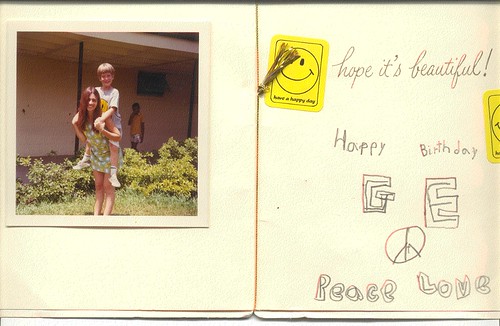
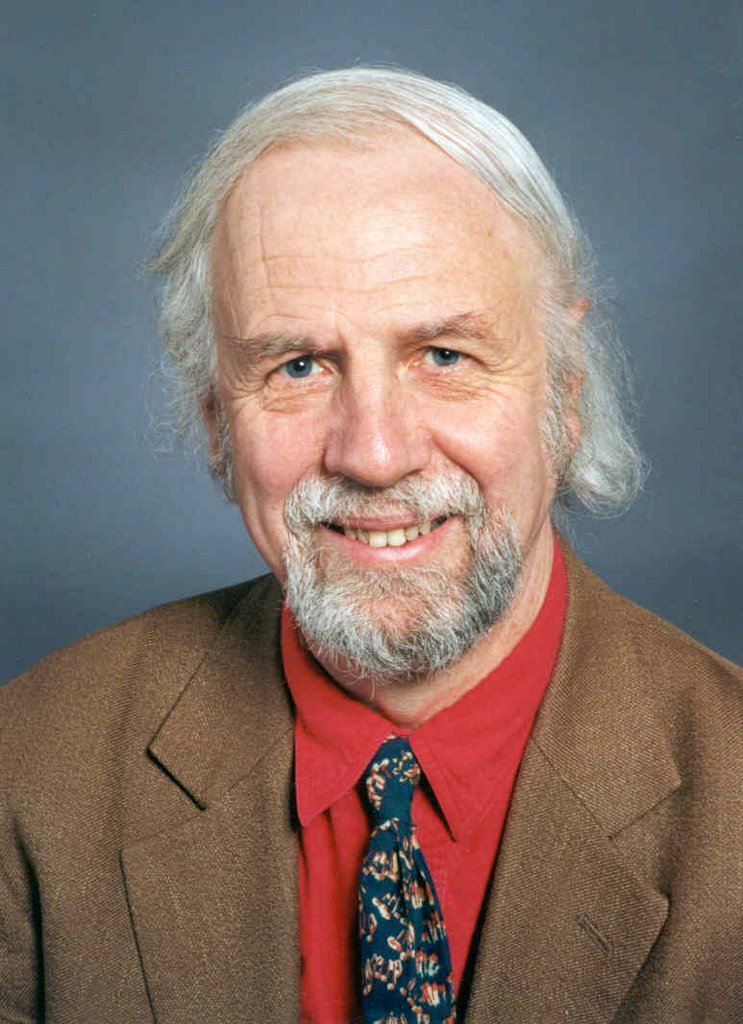
Dena West (then) was a groovy chick as the picture above attests. A native Tampan; she had recently graduated from USF in Tampa. She taught for 1 1/2 years there before moving to Tallahassee. Anyway Dena was in her first year of what would be a short lived teaching career, but a spectacular one whatever its length. I loved her as much as I loved Miss Spillett back at the Anglo-American School in Stockholm, but Dena had the kind of deft touch that would never do anything in a classroom which might even accidentally backfire on a child. Well except for those old floor heaters (basically pipes full of hot water running under the floor--real bright idea in an elementary school, no?). They always turned on on the hottest days and many a Krayola was offered up to their wrath until it looked like we had a rainbow coalition wax floor covering.

Dena sure knew how to make a new student fell right at home. She took me to the front of class and told students that I had just returned from living in Sweden and then showed them where that was on an overhead flat world map. Then she announced "His name is George Evans but we will call him G. E.," and thus the "legend" was born. Ironically no one else had ever noticed this simple fact about my given name. That half year went by in a rush, but I remember it as being endlessly educational and fun beyond all resonable expectation and involving lots of A+++++s and multliple gold stars (but note everyone in the class got their week to shine and receive special commendations). When you're six, it should be about encouragement not competition. I also know that special introduction earned me the undying "love" of every little girl in the class. For the next two and a half years I had the only female posse I've ever pulled. I'm not sure why it collapsed in fifth grade. But hey ancient history, ne-c'est pas?

I had forgotten but Dena reminded me that she made the unusual shift of moving up with our class from second to third grade. So she taught me for 1 and 1/2 years and then moved on to other ventures. But really, her leaving education wasn't MY fault!

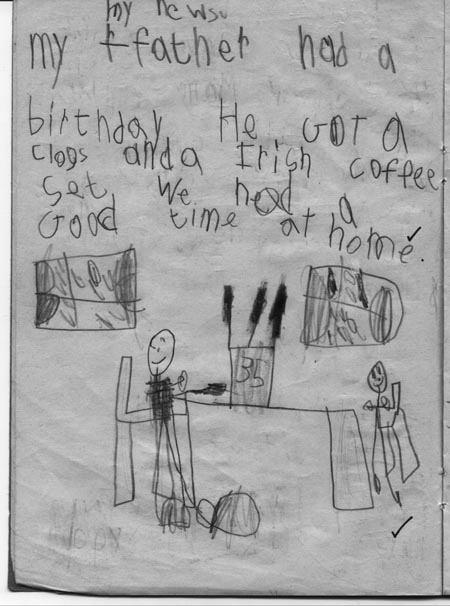
It takes a special kind of teacher to hold onto an old photo and badly drawn birthday card and then send them on as a return birthday gift 30+ years later. I only hope I treat my special former students with the same thoughtfulness, love, and respect in the future. Thanks Ms. West!

Monday, February 07, 2005

What is hip?

Long before Victor Conte formed Balco, he played bass for Oakland, CA's Tower of Power from 1978-9. During that period they asked the classic question which titles this entry numerous times. It will be the first in a series of reminiscences about the great teachers I have had the privilege to meet and study with/under over the years. They won't all be teachers in the traditional sense of a red brick school, classroom, chalkboards, and textbooks. But they all brought something special to their craft be it as a coach, a devotee of a particular instrument, or a specialist in a high-minded topic like Old Norse Sagas.

I'm starting with a professor I first met in the spring of 1983, with whom I have carried on an off-and-on correspondence for 20+ years and who did more than anyone to jumpstart my burgeoning career as a pop culture writer, even if it took me those same 20+ years to fully take the jump. He also best fits the bill of how I'd answer the title's question with respect to the topic at hand. And hey, without him, I wouldn't have my 20 year old vinyl copy of Abbey Road. But that's a story for later in this column.


John Brewer is a native Liverpudlian and the child of antiques dealers. He attended Cambridge University where he received a rare "starred" first in the History tripos. He proceeded to take a D.Phil. under J. H. Plumb, while also working with Bernard Bailyn as a Henry Fellow on a Visiting Fullbright at Harvard University. His dissertation became his first book, Party Ideology & Politics, published by Cambridge University Press in 1976. Since then he has written or co-written some 11 books on topics as diverse as crime, Britain's naval economy, satirical cartoons, the production of consumer goods in the eighteenth century, and the writing of history. His best known titles include The Birth of a Consumer Society (1982), The Sinews of Power (1989), Consumption and the World of Goods (1994), The Pleasures of the Imagination (1997), and A Sentimental Murder (2004). He has held academic positions at Cambridge, Washington University at St. Louis, Yale, Harvard, UCLA, European University Institute, Chicago, and Caltech, where he is currently Eli and Edye Broad Professor of Humanities and Social Sciences and Professor of History and Literature. From 1987-1991, he was also Director of the Clark Library at UCLA.

Of the books, I'd like to speak briefly about one of the now least well known, the collection of essays on law and rule which Brewer co-edited with John Styles. Of all the volumes coming out of the vibrant cultural exchange between British social history and the Annales School of France in the mid-seventies, An Ungovernable People (1983) had the widest range and the most purely fascinating essays even moreso than Albion's Fatal Tree, even if the latter's impact in the field of history was probably greater. Two personal faves were Keith Wrightson's study of two concepts of order (but then I too became a scholar of the early modern alehouse) and John Style's work on renegade Yorkshire coiners (who knew people filed down 18th century coins because they were made from actual precious metals?!?). These kind of detail specific studies which also generalize to larger theoretical concerns are always my favorite scholarly work. Here I must venture afield to mention my single favorite academic essay of all time, Dick Hebdige's "Object as Image," a heavily theoretical wide-ranging historical reconsideration of the various gender stereotypings of the Italian motorscooter from its birth as mass transit in the immediate post-war aftermath to its transition into a fashion accessory at the height of the mods versus rockers clashes down Brighton way.

I've had to blather on for this length about John's scholarship because it's so central to his identity and to his teaching, in a way that only the best teachers can integrate cutting edge material for undergraduates. Brewer arrived at Harvard from Yale as one of two young, modishly fashionable, and impossibly brilliant Cambridge-trained historians (the other was Simon Schama), the main distinction being John only had one set of colored plastic framed glasses--green if memory serves. I decided to take a look at "The Hanoverian Golden Age 1680-1790" in the spring of 1983 because the previous year's Confidential Guide to Courses at Harvard-Radcliffe 1981-82 had talked it up and Brewer was the chair of my concentration (translation: major), History and Literature. Here's how the Confi Guide introduced Brewer:
Yes, there is hope for you sophisticated scholars. Tired of not being taken seriously just because you're cool? Follow the example of John Brewer: he wears green-rimmed glasses, new-wave neckties, and a gangster hat, cuts his hair to the scalp, and is one of the leading historians in his field.
The authors went on to note that Brewer's lectures were highly organized yet still passionate: "He jumps around the stage, from maps to blackboard to slide screen, cursing irresponsible historians, and bellowing out the Truth." Most telling was their conclusion:
More than a lecturer, more than a fashion-plate, John Brewer is a teacher. His interest in students occasionally overflows into demagoguery and bad jokes, but the sentiment is there.
That indeed was the John Brewer I came to know well and admire in my remaining two years in Cambridge. That class is also one of those special ones where what you really learned only becomes clear in the long run. I didn't do quite as well as I had hoped (My grade? None of your business and that's not the point of this essay anyway); however, I still regularly refer to and use concepts from E.P. Thompson's classic essays on the "moral economy of the crowd" and "class struggle without class." In fact, the latter informs a recent essay I wrote connecting the Mekons and punk rock to American Alt.Country. In that class John had the publishers rush us pre-publication copies of Roy Porter's mighty little English Society in the 18th Century, invited John Styles over from Bath to lecture on class, and hosted a visit by Graham Swift, who'd just finished but hadn't yet published Waterland. Now that's what I call intellectual juice!

As I was preparing for my fellowship year abroad at York, he arranged to have lunch at one of Cambridge's hidden gems, Iruña. Over spanish omelettes and a pitcher of Sangrìa, he took me through everything I'd need to know to survive life in a British university, suggested some less well known tourist trips worth making, and generally helped me prepare for life abroad by myself (I had lived in Stockholm, Sweden and Freiburg-im-Briesgau, Germany previously but always with my family). As always we also talked about my latest musical finds.

That semester he also taught a new, experimental class, "Britain since 1945." This grand interdisciplinary course featured a listening party of the finest British rock and roll from Tenpole Tudor right the way through to the latest offering from the Smiths, an incredibly diverse reading list, and a fantastic film series with everything from Albert Finney's starring debut in Saturday Night and Sunday Morning through Peter Seller's brilliant dual roles in I'm All Right Jack to Bob Hoskin's modern noir classic The Long, Good Friday and my personal favorite Bill Forsyth's small gem Gregory's Girl featuring Altered Image's oh so fetching frontwoman, Clare Grogan. I wrote a paper based on research I did at the British Library's Music divison during spring break in London on the politics of punk rock with respect to The Sex Pistols, The Clash, and The Jam.

Oh yes, the in-class competition. One day in class Brewer casually mentioned he had a prize for whoever could identify the most faces on the cover of Sgt. Pepper's. Sir Peter Blake's original is in a museum now. A few days later I gave him a nearly complete list. Truth be told, I did consult some reference sources at one point, but they were mainly unreliable as so much rock writing is. One of the evils of the Internet is it makes contests like this almost pointless anymore. The next class somebody asked if the contest was still open and I was so proud to hear Brewer say, "Technically yes, but don't bother because you won't win!" Score! My prize was the purchase of an album of my choice from the Harvard Coop's famous record department, then the finest in New England. I chose Abbey Road which was the one late Beatles album I had somehow missed out on purchasing back in the late 1960s or since then. Yup, that's what I call hip.

Post-Harvard, I have had infrequent meetings with John, usually when we were both in London working at the Reading Room of the British Library. In those days it was still inside the British Museum in what is now the Great Court. We would get togther for lunch (Italian or Greek somewhere in Bloomsbury) or drinks (The Museum Tavern or The Princess Louise on High Holborn) and chat about our projects and whatever was of interest in the papers that week. John kindly put up with my sometimes overly enthusiastic naïveté. But always he asked me "What are you listening to?" as if my taste really mattered. For that and for everything else John, thanks ever so much. And as they say in my beloved Yorkshire "Ta."

In future editions of this column, which like an endless Ray Charles tune will be titled "What is Hip? Part [appropriate number here]," you'll meet amongst others the 2nd grade teacher who first dubbed me G.E. Light, the swim coach who saw me finish 4th in the state of Florida at Junior Olympics while dropping 30 seconds off my previous time in my second competitive try at the 500 yard free as a twelve year old, and the 8th grade English teacher who first showed me Citizen Kane, thus beginning my formal cinematic education.